News · 07 Nov 2026
Four Day Hikes Within Reach of Beirut (and When to Go)

One of the best things about living in Lebanon is how fast the city falls away. Leave Beirut early enough and you can be walking on a Roman road, under thousand-year-old cedars or along the floor of a holy valley before most people have had their coffee.
These are four places we keep going back to, all doable as a day trip. Drive times are rough and depend completely on traffic, so start early.
1. Jabal Moussa: the Roman stairs
Where: Keserwan, about 50 km from Beirut, entering at Qehmez or Mchati.
Good for: an easy morning, families, first-time hikers.
Jabal Moussa is a UNESCO biosphere reserve with a well-run network of marked trails. The one to start with is the Roman stairs: a short, easy stretch of the old Roman path linking the Qehmez and Mchati entrances, about 1.9 km and one of the best-preserved sections of it in the country. Keep an eye on the rocks along the way for inscriptions from the time of Emperor Hadrian.
If you want a longer day, the reserve's other trails start from the same entrances. The reserve is open daily from 8:00 to 17:00 and charges a small entrance fee. Lunch and guesthouse stays need booking ahead.
2. The Shouf: Barouk to Maasser el Chouf
Where: Shouf Biosphere Reserve, Mount Lebanon.
Good for: a proper full day, and cedars.
This is section 19 of the Lebanon Mountain Trail: 14 km through the Shouf Biosphere Reserve and the Masyaf el Mir forest, between Barouk and Maasser el Chouf. It's long and climbs over 1,000 m if you walk it from Barouk, so it's rated very difficult in that direction. Walk it the other way, from Maasser el Chouf down towards Barouk, and it's a more forgiving 668 m of ascent. There are no technical passages, just steady effort.
The reward is the cedar forest itself, some of the largest remaining stands in the country. Bring more water than you think you need.
3. Qadisha: Wadi Qannoubine to Bcharre
Where: North Lebanon, below Bcharre.
Good for: history, silence and strong legs.
The Qadisha Valley is a UNESCO World Heritage site, and Wadi Qannoubine is one of its two main valleys. For centuries it sheltered monks and hermits, and the monasteries, chapels and hermitages they cut into the rock are still there, tucked into the cliffs.
LMT section 7 runs 13.3 km from Wadi Qannoubine up to Bcharre, with about 722 m of climbing, and is rated difficult. Most of that climb comes at the end, on the way out of the valley, with views east to the high peaks and the cedars above Bcharre. The river on the valley floor only runs in spring, so don't count on it for water. The valley is accessible all year.
4. Baatara Gorge: right now is the time
Where: Tannourine, North Lebanon.
Good for: a short walk and a big view. Combine it with a longer hike nearby.
This one is less a hike than a pilgrimage. In Baatara, a waterfall drops 255 m through three natural stone bridges into a sinkhole in Jurassic limestone. It only really flows from roughly November to April, when rain and snowmelt feed it, so this is the season. The cave was first documented for the outside world in 1952 by the French bio-speleologist Henri Coiffait.
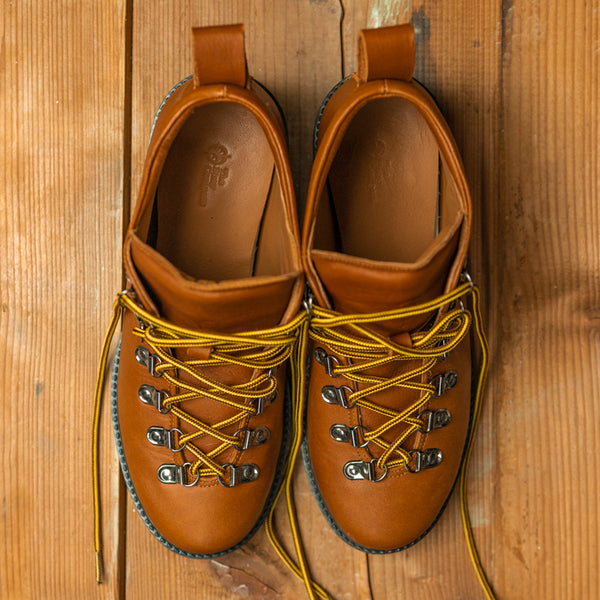
The path down to the viewpoint is short, but it gets wet and slippery in winter. Wear shoes with real grip.
A few things we always pack
- Layers. It can be warm on the coast and properly cold at 1,800 m on the same day. A light insulating layer and something to keep the rain off, even in spring.
- Water and food for the whole day. Many trails pass villages, but not always at the right moment.
- A headlamp. Days are short in winter, and the last hour always takes longer than planned.
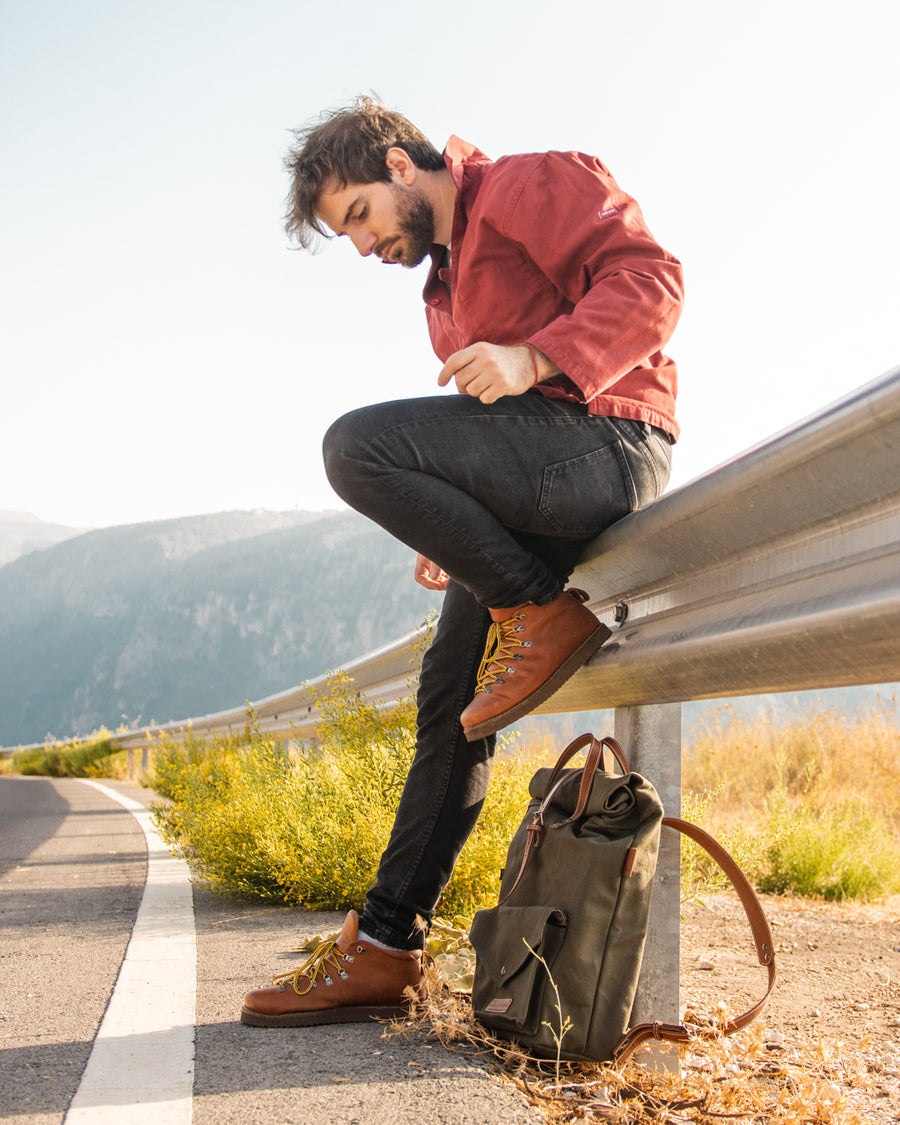
- A bag you don't have to baby. Something that can sit in mud at a lunch stop and shrug off a shower.
- Cash. For entrance fees, a man'oushe in the village, or a guesthouse if you decide to stay.
Walk it well
Stay on marked trails, take your rubbish home, and don't pick plants in the reserves. If you're new to a trail, hire a local guide. The Lebanon Mountain Trail Association lists guides and guesthouses for each section, and staying a night in a village is the best way to make sure these trails are worth protecting for the people who live along them.
And if you want to keep going, the whole Lebanon Mountain Trail runs about 470 km from Andaket in the north to Marjayoun in the south, through more than 75 towns and villages. That's a lot of weekends.
Keep reading
More from News
 Measure Once, Order Once: How to Find Your Jacket Size
Why the same size fits differently in every jacket, how to measure yourself in two minutes, and what...
 Patina, Not Dirt: How to Care for (and Re-Wax) Waxed Canvas
Those pale creases aren't damage, they're a map. How to clean waxed canvas without stripping it, spot when...